
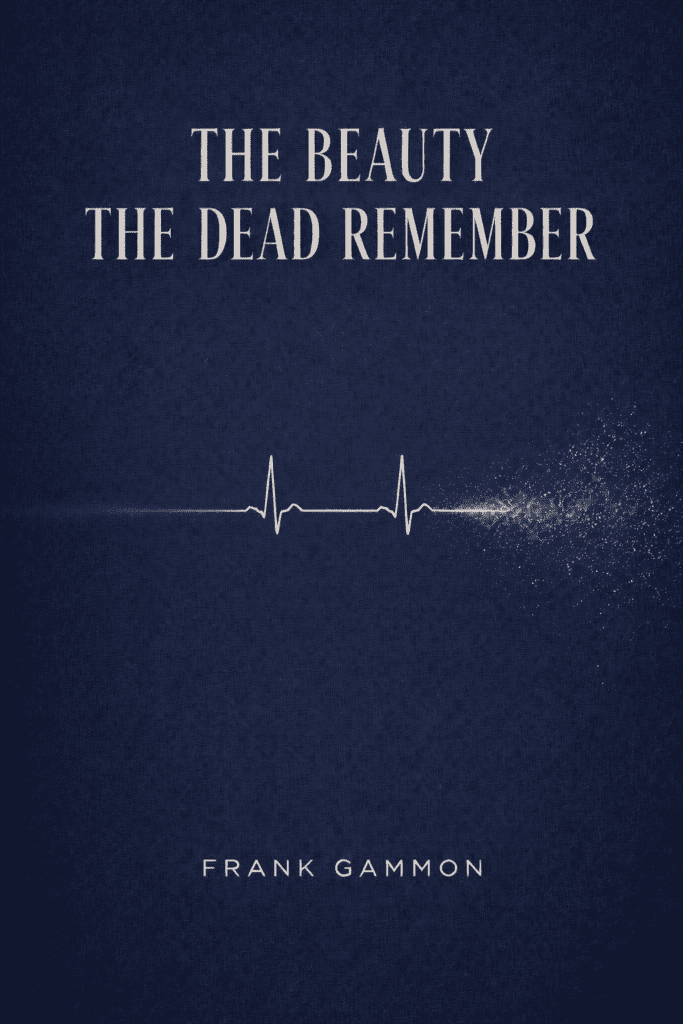
TL;DR: I’ve spent the last year world building and writing. Three novels set in a world after humanity’s extinction where a planetary AI maintains empty cities, the last vampire broadcasts into silence, and together they hold everything needed to bring us back. The question at the center of every book: should they? The first novel is complete, professionally edited, and currently with beta readers. If you want to be an early reader or know the moment it publishes, sign up at IdeasQuantified Press.
My Writing Journey:
People say that if you want to become a better writer, you need to write more. If you are reading this, you probably already know that I write a lot. Between IdeasQuantified and LinkedIn, I try to post long-form content fairly regularly.
But my writing journey started much earlier.
In the early 2000s, when MySpace was still a thing and Facebook did not yet dominate the internet, I regularly wrote blog posts about whatever was on my mind: observations, technology, projects, even working on cars. During that same stretch of life, I also privately wrote more than 400,000 words about my thoughts, feelings, relationships, choices, and the world as I experienced it. Those journals were introspective, but they also sharpened something important in me: narrative flow, emotional awareness, and the habit of turning experience into language.
By the late 2000s, I drifted away from writing and focused more on inventing things. I built prototypes and entered competitions, though none of those efforts ultimately succeeded. Even so, I learned a lot from the process. One of the biggest lessons was that elegant ideas still have to survive contact with reality. Simplicity matters. Extra complexity, extra parts, and extra friction have a cost. That lesson stayed with me, and in a different way, it applies to writing too.
By the mid-2010s, I started returning to writing with a different goal. I wanted to create a book that carried philosophy inside a compelling narrative. Something thoughtful, but still driven by story.
My First Serious Attempt:
My first real attempt at a novel came with help from Jo Anna Parker Martin. The book was called Project Olympus, and it followed a group of scientists trying to create the world’s first superhero.
The first draft was rough. I wrote it in Google Docs over a decade ago, one chapter at a time, and it eventually grew to around 200 pages. Jo Anna helped me see weaknesses I would not have recognized on my own, especially around point of view, voice, and how differently perspective can land depending on the character. She also helped me recognize that I was often writing like a screenwriter rather than a novelist.
That distinction took time for me to fully understand. In a screenplay, much of the burden falls on what the audience infers from action, performance, and visuals. In a novel, the reader is not just watching. The reader is inhabiting. Interior experience matters. Emotional texture matters. The goal is not only to show events, but to allow the reader to live inside the perspective.
A quote I came across later summed that difference up well:
With the prevalence of movies, TV, and cinematography, book writers forget that their craft is not a stylized screenplay. Television is a distinct art from books. Both have their strengths, but modern writers often fall into the trap of writing their books like they’re watching a movie. This instance of interiority in strong reader-POV connection is case and point. In movies, we spectate. In books, we experience. Writers who understand this can make their readers experience breathtaking emotional stakes/tension/rollercoasters/thrills far beyond that of movies. Movies transport the viewer to another world. Books transport the reader to another personal experience.-HGL7154 (https://www.youtube.com/watch?v=AHZoqFud44U)
That lesson stayed with me, even though many years passed before I returned to fiction seriously.
What Changed:
Last year, I was invited to play Dungeons & Dragons for the first time since I was a teenager. I am dating myself a bit here, but I started playing before it became Advanced Dungeons & Dragons, and I stopped not long after 2nd edition. Returning to it now meant relearning the rules from scratch.
As I did, something in me restarted.
I began thinking about character design again, and specifically about the kind of character I wanted to play: someone grounded, analytical, and modern in temperament, but dropped into a world of magic. I wanted a gritty realism approach. A character who would use as much science, logic, and observation as possible to survive and interpret the world around him.
That led me to think about all the fantasy characters I had created or played over the course of my life, from tabletop games in the 1990s to computer-generated characters in the decades after. I began imagining a world that carried fragments of those personalities and archetypes within it. Once that started, it became difficult to turn off.
I had trouble sleeping. I would lie in bed and build mythology, systems, histories, and scenes in my head. I started recording ideas constantly. I used voice memos while driving. I wrote notes on my phone while waiting somewhere. When I got home, I would sort through the fragments, research what I could, keep what felt plausible, and discard what did not.
I went down a lot of rabbit holes.
Eventually, when I felt ready, I started writing in earnest. I outlined the story and mapped its beats. Then I broke it into scenes, then chapters, then drafts. I repeated that cycle over and over, refining the story each time from initial concept toward something more complete.
Because I wanted a way to preserve earlier versions, I started using Github. It already held the code for my applications, FactCheck and WhereTo, so using it for story drafts, characters, world building notes, and revision history felt natural. If it could track software, it could track a novel.
That process changed the way I wrote. I was no longer just drafting intuitively. I was combining creative work with the systems thinking, iteration habits, and workflows I had developed through years of building applications.
From One Story to a Connected World:
My first complete revision from that process came in at around 40,000 words, a novella I loosely called Echoes Forward. I shared it with a few close friends, and the feedback was helpful and honest: the ideas were strong, but the writing was too dense.
So I revised. Shared. Revised again. Repeated. Eventually, though, I put that project on pause.
Instead, I returned to another idea that had been sitting in the back of my mind since 2023, Theory: AI as a human disaster recovery model.
That idea opened a much larger door.
I began imagining what a collapsing world would actually look like across different places and times. I researched across a wide range of subjects, many of them unrelated on the surface. My goal was to ground the story in as much plausible science as possible, or at least get as close as I could.
As I wrote, I found myself reusing pieces of the mythology, rules, and world building from the earlier novella. That accelerated everything. I had already done some of the foundational work. More importantly, it revealed something unexpected: the books were connected. What I thought had been separate projects were actually part of the same larger universe.
That realization changed the scope of what I was building.
Shaping the First Novel:
After a few drafts, I shared the new manuscript with close friends. This one was around 82,000 words, and the response was clear: it was much stronger than the earlier work.
From there, I revised again and posted in r/BetaReaders on Reddit to find outside readers. That feedback was extremely useful. Around that time, I also began working with a developmental editor, who turned out to be the biggest help of all.
One of the most important lessons from that stage was about density, especially in the opening chapter. Some of the material was good, but good writing is not always well-placed writing. Sometimes you have to cut material not because it is bad, but because it belongs somewhere else. Sometimes you need to reduce the number of adjectives, simplify dialogue, or move information to the point in the story where it matters most.
The result is a better reading experience. The world still unfolds, but it does so more organically. The reader discovers rather than being overloaded. They experience rather than being told.
The editor and I went back and forth through many revisions, and that process felt familiar to me in a surprising way. It felt like building a product: shaping, testing, refining, removing friction, clarifying purpose, strengthening structure. When we finished that round, I sent the revised version back to beta readers, and the response was encouraging. The writing was smoother, and the first chapter was much more engaging.
Why I Created IdeasQuantified Press:
That is where IdeasQuantified Press comes in.
I wanted a place built specifically for the fiction. A place where I could connect with readers, show how the lore and mythology fit together, and give these books a home separate from the broader IdeasQuantified site.
IdeasQuantified has always been more about technology, applications, and ideas. This project needed a space centered on the novels themselves.
So I built IdeasQuantified Press as the fiction and publishing arm for this universe and the books connected to it. It is where readers can follow the story, explore the mythology behind the world, and stay updated on The Beauty the Dead Remember, the first novel in the series.
What Comes Next:
The book is with beta readers now. When that process is complete, I will make a final round of refinements and move toward publication. That takes time, but it is moving.
If any part of this resonates with you, the premise, the writing journey, the worldbuilding, or simply the stubbornness it takes to finish something long and difficult, I would love for you to follow along.
The newsletter at IdeasQuantified Press is the best way to stay connected.
No spam. Just meaningful updates when there is real news to share.