
This will be a shorter article since it is an addendum to FactCheck.
When I released FactCheck, an important part of the feedback that I received was asking if the things on Instagram and TikTok were real or not. At the time, I did not use Instagram or TikTok and had not considered that as a way people consumed information, but I had implemented factchecking for YouTube. I started to think on the question some and let the question simmer in the back of my mind.
However, yesterday Euronews released a study that showed 56% percent, or over half, of all social media posts on mental health had misinformation on them. The worst offender of all being TikTok. Also, if you want to go down the rabbit hole and do some other reading, there are independent journals, a Guardian Investigation, and others like Nature magazine.
Now, let me repeat those results for dramatic effect.
HALF.OF.ALL.POSTS.ARE.FAKE.
I can not repeat enough how dangerous and harmful that is, especially for young impressionable minds or for people that are suffering from depression, anxiety, and other conditions that are exacerbated by the current state of the world.
At the time the feedback came in asking me if the articles were true or not, I did not have an answer to the question or how to remedy it, but now I do.
FactCheck for iOS and Android now has Instagram and TikTok factchecking implemented along with YouTube and others. If you want to know how, this is the short version.
Essentially, this problem has a couple parts that make it more complicated than something like YouTube. First, YouTube is still primarily long form content that you can analyze via the transcript. Yes, there are YouTube Shorts, but most of those have AI generated transcription and also most short form content at this time is still dominated by other platforms. To that end, you have a couple of options on the other platforms.
There are two problems with short form content on the other platforms. The reason is that because of the nature of short form video content, content creators will use both audio as well as video to feed information, sometimes, with different messages.
For the audio portion, you have several options. One example is to use something like the Whisper API from OpenAI or others to send the audio to be converted into text and then from text you can analyze the contents. Part of the beauty of something like Whisper is that you can transcribe the audio from different languages which is extremely flexible.
For video, you need to basically use something like OCR (Optical Character Recognition) to watch the video and decode what text it sees.
Here is a demonstration of how it works using FactCheck on an iPad.
First, find the video you want to check. In this case, a Demi Lovato video popped up when I searched Google for TikTok videos. Click the share button and notice FactCheck is there.
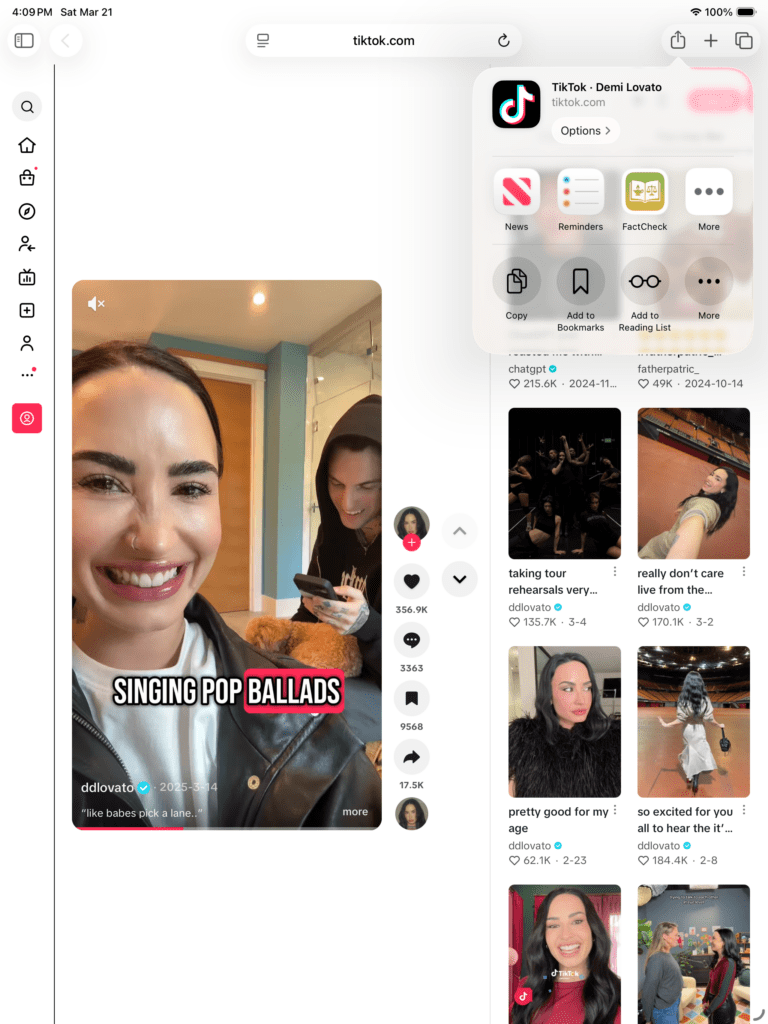
It will then open it in FactCheck and start playing. Just exit out of full screen mode and click the FactCheck button at the bottom of the screen.
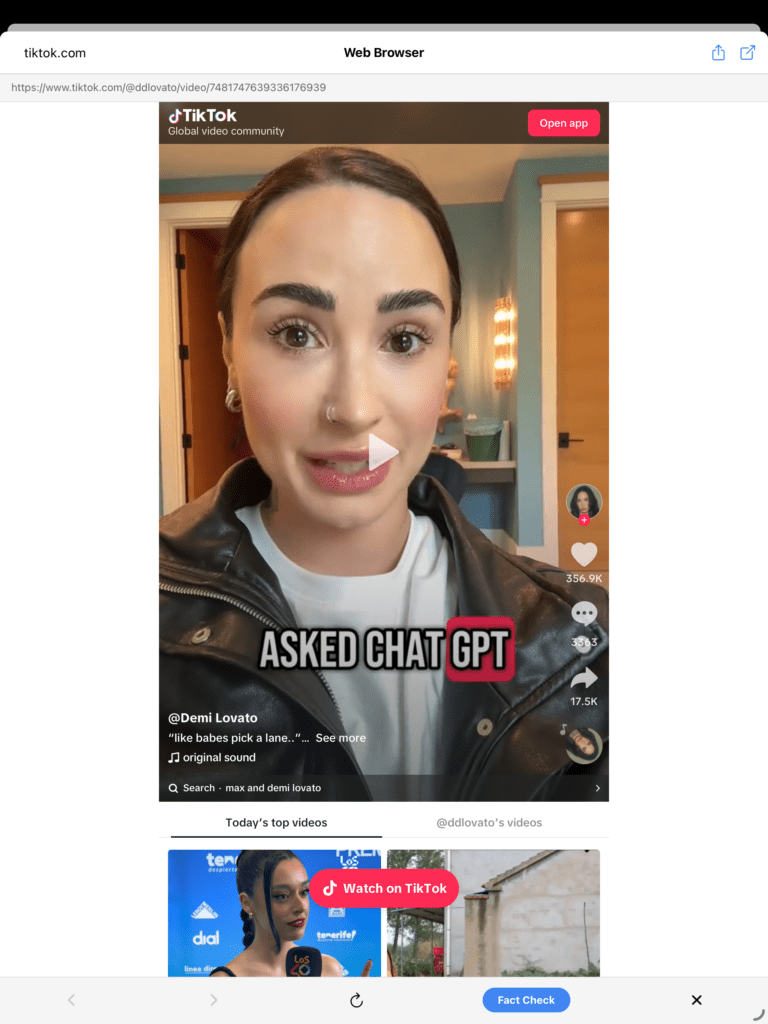
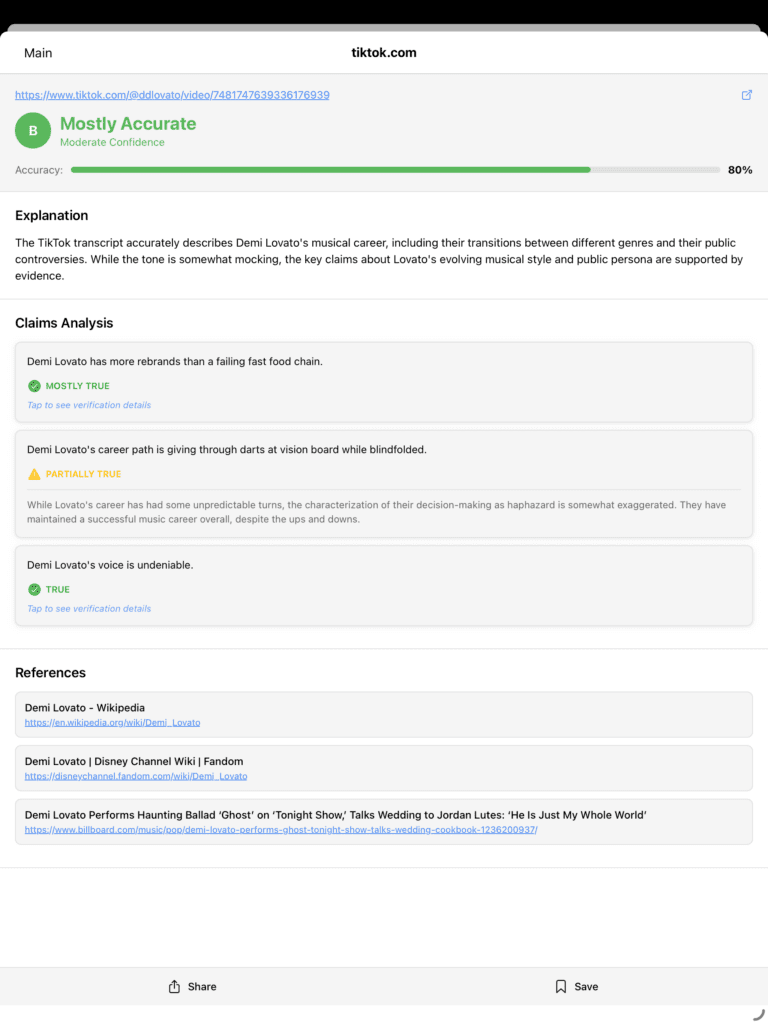
It will take about 20 seconds depending on the AI model and transcription and then report the results for you to see.
Ok, what about Instagram. Let’s look for another popular Instagram video. In this case, this popped up in a Google search. Just click the share button and send it to FactCheck.
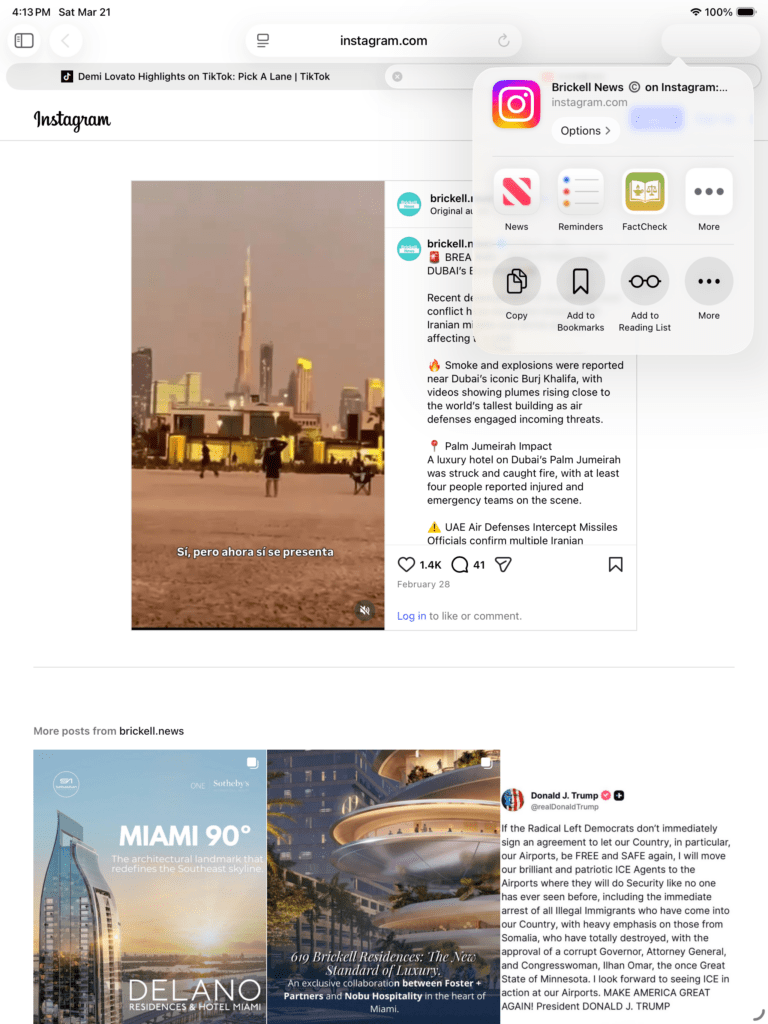
When it opens, just exit full screen mode if it opens the video and click the FactCheck button.
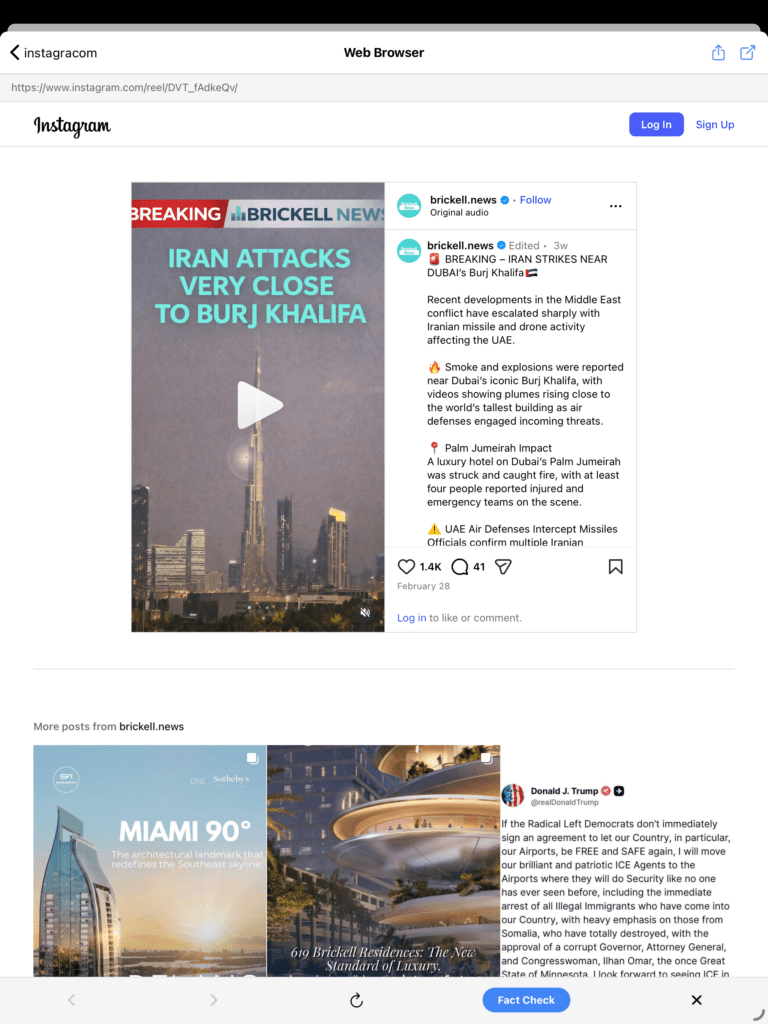
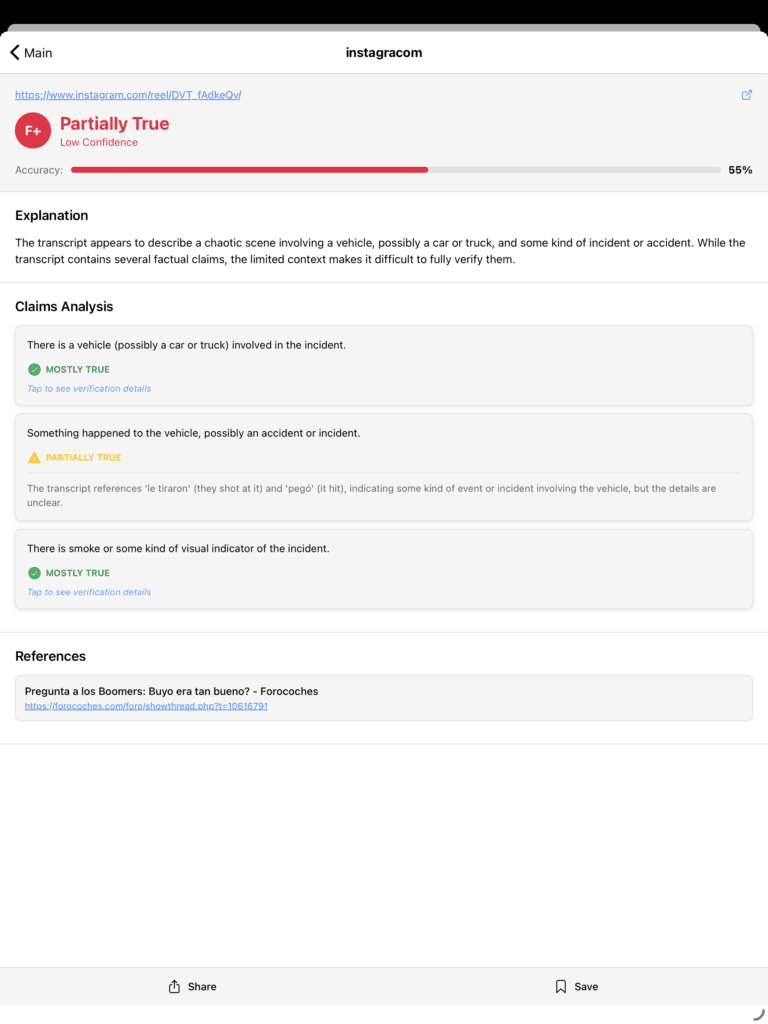
Wait about 20 seconds for the video transcription and AI models to process and you will get your results. In this case, the results appear to be low confidence which backs up the Euronews report so let’s try another video as a comparison.
What about this? A content creator explains how to turn photos into reels. Just click the share button and send it to FactCheck.
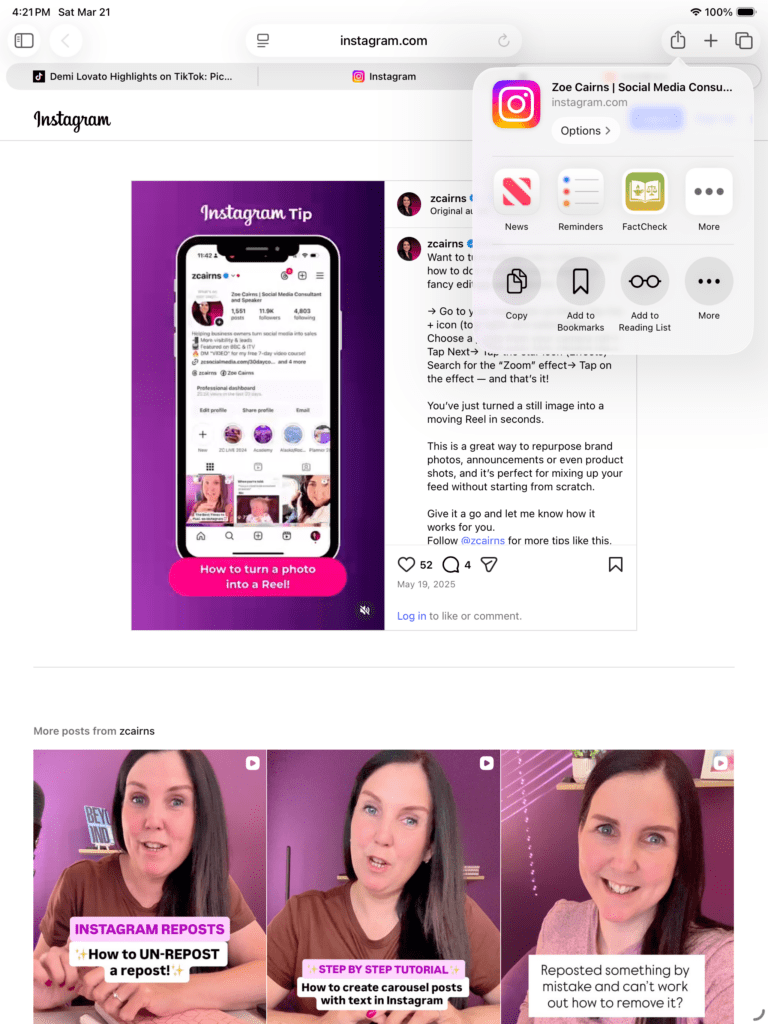
Okay, now that the video is loaded in FactCheck, click the FactCheck button.
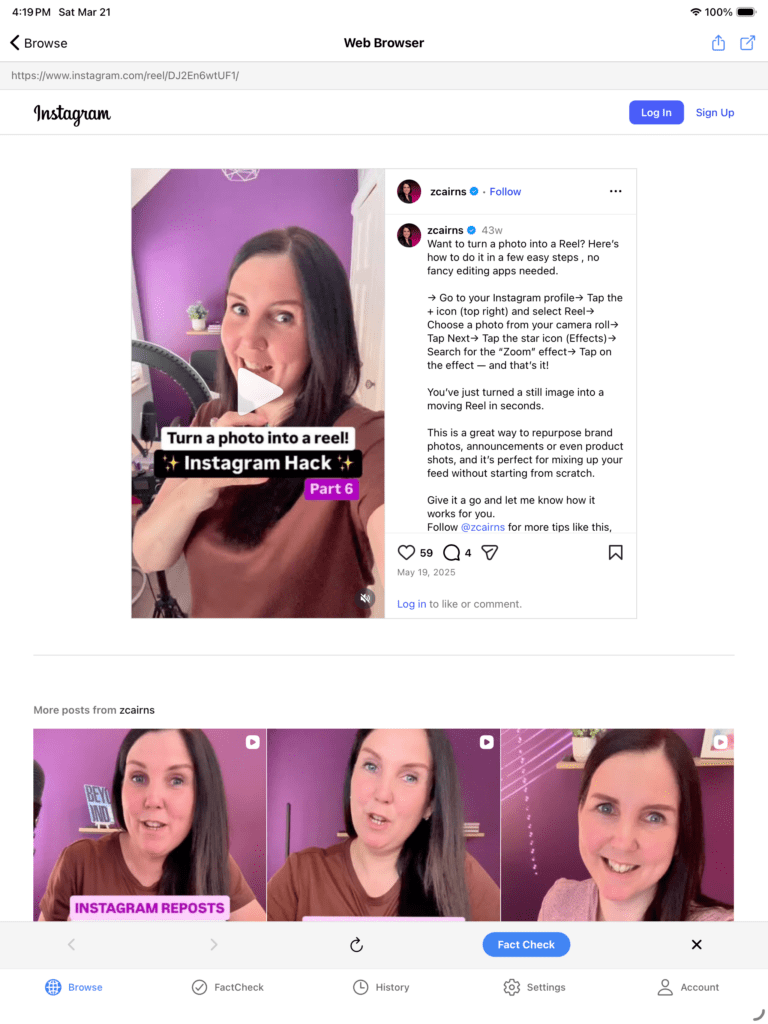
Just wait about 20 seconds and survey says…
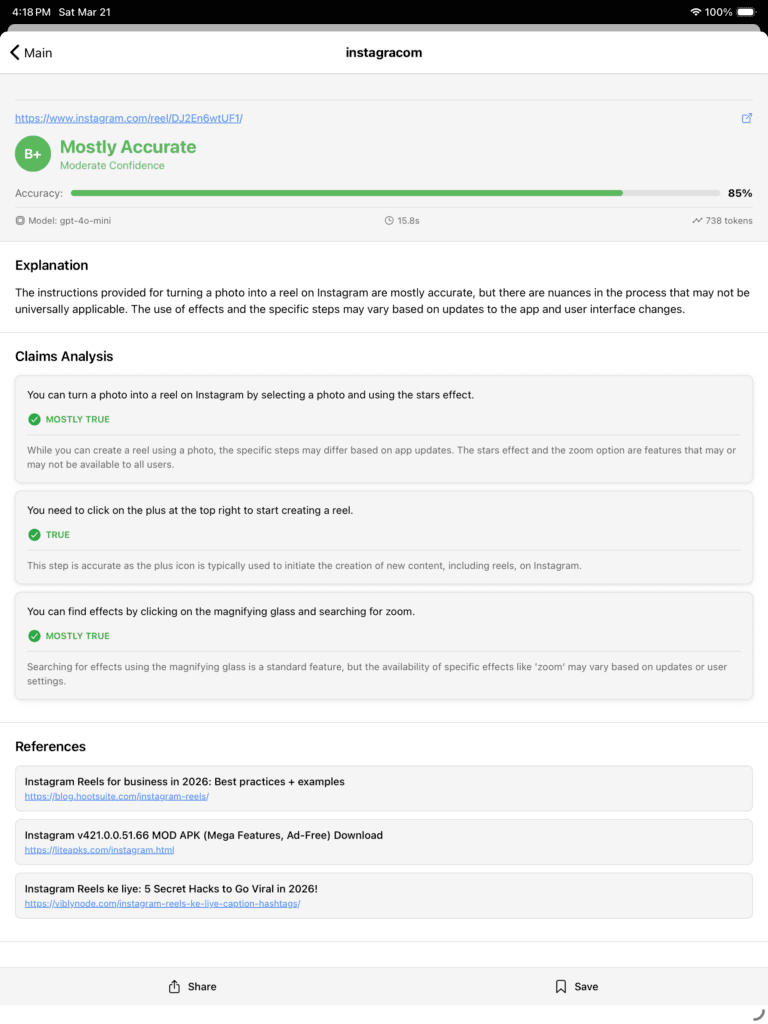
So that’s it. It works. As far as I know, this is the only app that does this on multiple platforms. I hope it helps. Make sure to always verify things that seem too good to be true or too scary to believe.
Also, as a reminder FactCheck originally started as the open source project Rene: an open source fact checker and was then adapted to mobile usage for iOS and Android.
For more information on FactCheck please check out the article on it at: https://www.ideasquantified.com/factcheck-from-ideasquantified/
If you are wanting to try out FactCheck, you can use it for free up to 3 times a day, sign up to use it more often along with other AI models and features, or even use your own API keys via BYOK methods. You can try it at the Apple AppStore or the Google PlayStore.